


The billionaire co-founder of the macro-focused hedge fund Discovery Capital is pouring hundreds of millions of dollars into two AI picks-and-shovels plays.
The News
Discovery Capital’s latest 13F filing shows that Rob Citrone opened a new position in Sandisk Corporation (SNDK), snapping up 183,700 SNDK shares worth $116.711 million in Q1 of this year.
Sandisk is a leading provider of high-speed storage for AI data centers and cloud infrastructure, and Discovery’s largest buy by portfolio percentage and dollar value last quarter.
The hedge fund also initiated a fresh stake in ON Semiconductor Corporation (ON) last quarter, gobbling up 1,409,300 ON shares valued at $87.263 million.
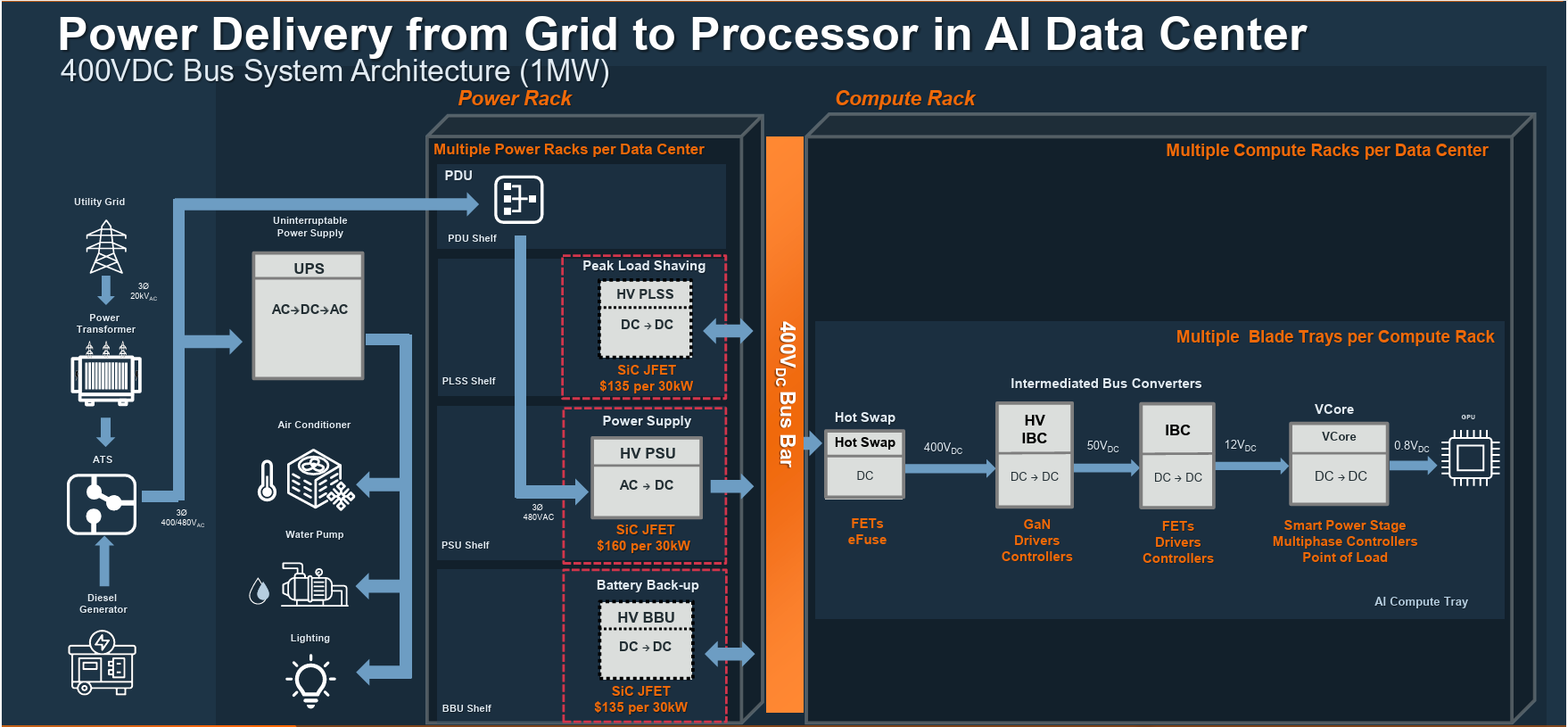
On Semiconductor is one of the world’s largest power chipmakers, specializing in intelligent power and sensing technologies used in automotive, industrial and AI data center markets. It is also Discovery’s second-largest buy in terms of portfolio percentage and dollar value in Q1.
On top of the new positions, Discovery massively increased its holdings in BlackRock’s iShares Bitcoin Trust (IBIT) exchange-traded fund (ETF) by 9,332% in the quarter ending March 31st. The firm added 636,900 IBIT shares to bring its ownership to 643,725 IBIT shares worth $24.731 million.
The hedge fund also loaded up on Amazon (AMZN), buying 81,100 AMZN shares to increase its stake to 124,400 AMZN shares valued at $25.908 million. And Discovery increased its stake in Micron Technology (MU), accumulating 170,850 shares to bring its total investment up to 276,050 MU shares worth $93.260 million.
On the sell side, Discovery dumped 100% of its stake in Broadcom (AVGO) in Q1, selling 83,200 AVGO shares, previously valued at $28.795 million. The hedge fund also fully exited Advanced Micro Devices (AMD) last quarter, dumping 131,400 AMD shares worth $28.140 million in Q4 of 2025. And Discovery sold all of its Meta (META) holdings, unloading 42,000 META shares previously valued at $27.723 million.
What It Means for Investors
Many institutional investors have been accumulating the obvious beneficiaries of the AI boom. For instance, billionaire Ray Dalio’s Bridgewater Associates bought 586,064 shares of Micron last quarter. Paul Tudor Jones opened a new position in Micron, loading up 355,468 MU shares worth $120.091 million in Q1 as well.
Micron has been front and center over the last few days after banking giant UBS lifted its price target on MU from $535 to $1,635.
While Citrone also accumulated Micron last quarter, two of his bets could have easily gone unnoticed. Starting with On Semiconductor, Citrone appears to have caught an under-the-radar data center, electric vehicle (EV) and robotics play.
In Q1, On Semiconductor reported revenue of $1.513 billion and delivered adjusted earnings per share (EPS) of $0.64, beating consensus estimates of $1.49 billion in revenue and $0.61 EPS. President and CEO Hassane El‑Khoury says the company’s AI data center business is accelerating, growing more than 30% sequentially.
“Looking ahead, we are encouraged by the underlying health of the business and the long‑term opportunities driven by increasing semiconductor content in automotive, industrial and AI data center applications.”
Although the company is reaping the gains of the AI buildout, it also appears to be in a solid position to capture the upside gains in robotics and electric vehicles. On Semiconductor aims to simplify robotic development with intelligent power and sensing solutions. In March, RBC Capital Markets projected that the total addressable market for robotics could hit $9 trillion by 2050.
As for electric vehicles, the company is already leading the charge in EV architectures that enable extended range and flash charging in collaboration with Chinese brands Geely and NIO. The global EV market size is expected to reach $823.75 billion by 2030.
These are solid long-term catalysts that could propel ON’s price higher in the coming years.
The other interesting piece of Citrone’s investments is Bitcoin (BTC) exposure via IBIT. Many investors wouldn’t see Bitcoin as an AI play, but former Morgan Stanley managing director Jordi Visser said it is.
Earlier this week, Visser called Bitcoin “the purest AI trade” because he believes that AI agents will exponentially drive BTC’s network effects as they adopt stablecoins and crypto payment rails. Network effect is a phenomenon where the value of an asset increases as more people use it. Bitcoin’s network-effect narrative has stood the test of time so far, even after going through multiple bull and bear markets.
In January, VanEck released a report projecting that BTC could hit $2.9 million by 2050, with a compound annual growth rate (CAGR) of 15%. The global investment management firm said it believes BTC will be responsible for settling 5-10% of global trade and that it will account for 2.5% of central bank balance sheets. VanEck’s projection did not account for AI-agent adoption or additional network-effect dynamics.
All in all, Citrone may have invested in the known AI beneficiaries, but two plays stand out. Citrone’s positioning suggests he may be targeting less crowded AI-related trades outside the dominant hyperscaler and surging chip names.
Disclaimer: Opinions expressed at CapitalAI Daily are not investment advice. Investors should do their own due diligence before making any decisions involving securities, cryptocurrencies, or digital assets. Your transfers and trades are at your own risk, and any losses you may incur are your responsibility. CapitalAI Daily does not recommend the buying or selling of any assets, nor is CapitalAI Daily an investment advisor. See our Editorial Standards and Terms of Use.