


Billionaire Ray Dalio says the AI buildout is no different from other major technology cycles in the past, as companies raise massive amounts of money to fund their ambitions.
The News
In a new Bloomberg interview, Dalio says history shows that all tech cycles have produced a bubble because companies are forced to spend aggressively to capture market share amid heavy competition.
“All great technological changes produce bubbles. And the reason they produce bubbles is because nobody can get it exactly right. Okay. You have to either spend a ton of money to capture your market share and so on. And don’t worry about whether it’s too much or not. Or you don’t spend enough money, and you lose your market share. And it’s very imprecise with a lot of competition.”
Dalio believes that AI is now in a bubble that will eventually burst, noting that it is inching closer to levels witnessed during the dot-com bubble in 2000 and the Wall Street boom in 1929. The billionaire also urges investors to keep a close watch on one element that could trigger the “pricking” of the bubble.
“There is a bubble, and then there’s the pricking of the bubble. And the pricking of the bubble happens when there’s a need for wealth to be sold to get the money. In the dynamics of a debt problem, if you take the Japanese bubble, take the ’29 bubble, take the 2000 bubble, all of them have an element of tightening money because it can’t go on forever. It’ll find its bubble. The question is how long you let the bubble go before there’s the pricking.”
Dalio’s bubble comments come as Google parent Alphabet announced it is raising $80 billion to support infrastructure plans amid “unprecedented customer demand” for compute access. Goldman Sachs CEO David Solomon said Alphabet’s capital raise is the “largest follow-on equity deal that’s ever been done,” noting it is a sign that greed is driving the market higher.
What It Means for Investors
Dalio is not alone in saying that tech companies are driven to raise and shell out tens of billions of dollars to capture market share.
In December, Anthropic CEO Dario Amodei said the AI industry is facing the “cone of uncertainty,” as companies are being forced to lock in orders for compute capacity years before any revenue arrives. Amodei explained that the one- to two-year lag in building out data centers means firms have to spend now without knowing whether they will fall short and turn customers away or overspend and risk collapse.
In Alphabet’s case, the tech titan is raising funds because it is seeing huge customer demand, but as Amodei noted, some companies are taking greater risks with far more uncertainty, suggesting that a bubble was already building as early as Q4 of 2025.
As for the pricking of the bubble, Dalio highlights that it begins with tight monetary conditions. Tech companies are in a race to raise funds to support infrastructure ambitions or operations. In March, OpenAI completed a record-breaking $122 billion funding round. Two months later, Anthropic announced a $65 billion financing round.
Neither AI giant has seen any profit and will likely continue to rely on investor funding to stay alive. At the moment, funding appears to be coming easily, but that could change if the Fed hikes rates.
During the dot-com bubble, the Fed abruptly raised rates by 175 basis points from June 1999 to May 2000 to combat an overheating economy, rising inflation and stock market speculation, ultimately leading to the “pricking” of the bubble.
For now, the Fed is likely to hold rates at the upcoming Federal Open Market Committee (FOMC) meeting, despite sticky inflation and elevated energy costs.
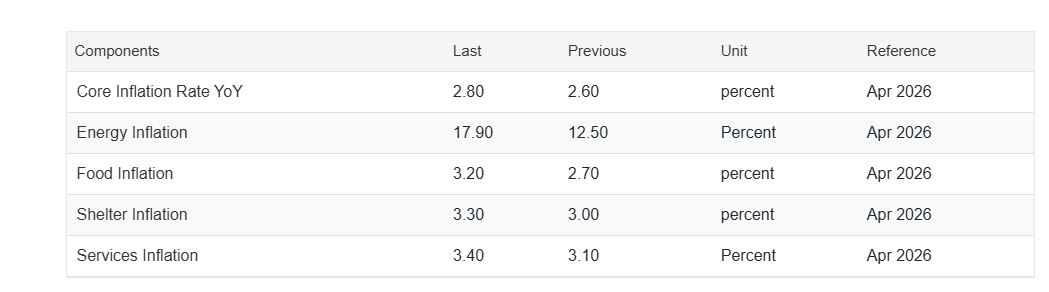
If history is any indication, the pricking of the bubble appears to begin when the Fed decides to hike rates. At that point, the cost of borrowing money becomes more expensive, leading to a tightening of capital that forces overleveraged companies to sell assets, cut spending or shut down entirely, the same sequence Dalio says has played out across every major bubble in modern history.
Disclaimer: Opinions expressed at CapitalAI Daily are not investment advice. Investors should do their own due diligence before making any decisions involving securities, cryptocurrencies, or digital assets. Your transfers and trades are at your own risk, and any losses you may incur are your responsibility. CapitalAI Daily does not recommend the buying or selling of any assets, nor is CapitalAI Daily an investment advisor. See our Editorial Standards and Terms of Use.