

Fundstrat’s head of research, Tom Lee, says there is one specific driver behind the latest Ethereum (ETH) sell-off, and it’s not market sentiment or major hacks in the ecosystem.
The Move
In a post on X, Lee points to Ethereum’s inverse correlation with oil prices, highlighting that it’s at the highest level in ETH’s history.
“Rising oil prices are the biggest headwind. ETH’s inverse correlation to oil is the highest ever. As oil rose in the past six weeks, ETH prices have fallen. Oil price is inverted (higher prices = downward). Thus, oil reversing = ETH prices recovering.”
Lee also says he is still long-term bullish on Ethereum, pointing to two big catalysts that can propel ETH’s price moving forward.
“This is short-term tactical noise.
The bigger driver for ETH is:
– Tokenization
– Agentic AI
These structural drivers are in place. Thus, we expect ETH prices to be stronger as we move through 2026.”
What It Means for Investors
For context, Ethereum has been in a strong downtrend since crypto topped out in August of 2025. Since then, ETH has collapsed from its all-time high of $4,957 to its current price of around $2,111, an over 57% decline in nine months.
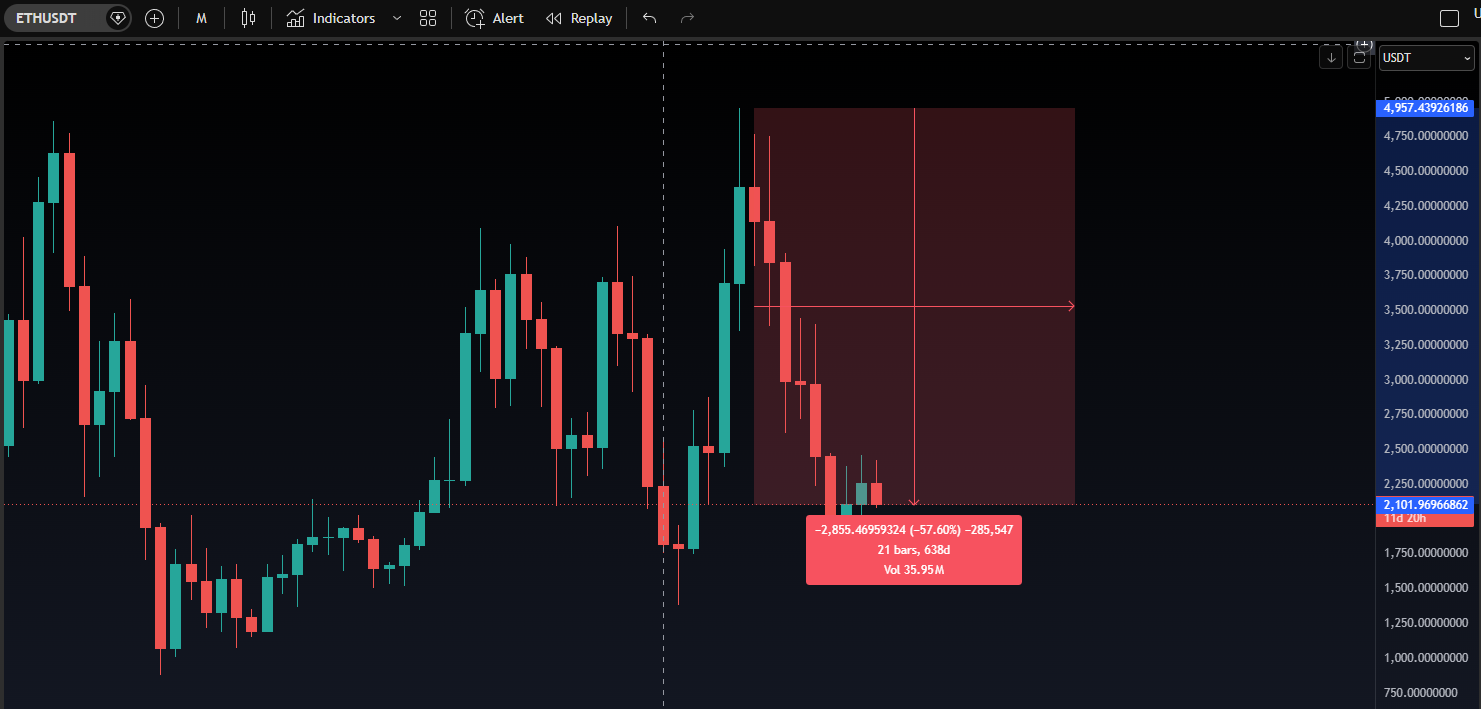
While Lee attributes ETH’s correction to rising oil prices, that reads more like a convenient explanation than an honest reckoning with the broader reality that Ethereum and crypto are deep in bear territory.
But Lee is not alone in mentioning the long-term bullish catalysts for Ethereum and crypto, including tokenization and agentic AI.
Tokenization is the process of converting the ownership rights of a physical or digital asset into a digital token that can be traded on the blockchain. BlackRock CEO Larry Fink previously said tokenized assets could open the floodgates for $4.1 trillion of money sitting in digital wallets. Ethereum is the most trusted layer-1 blockchain with the capability to create tokens and allow users to trade them 24/7.
As for AI agents, they are expected to dominate the digital economy, triggering billions of transactions in just a few years, and no other payment rail other than crypto can meet that requirement. Ethereum is uniquely positioned to capture the future market as it processes stablecoin transactions facilitated by layer-2 solutions like Coinbase’s Base.
Tokenization and AI agent stablecoin adoption will not happen overnight, but if Lee’s investment thesis plays out, Ethereum could be the primary beneficiary of the new trends.
By the end of 2028, Standard Chartered predicts that $4 trillion in tokenized assets will live on-chain. Meanwhile, stablecoin annual transactions have shattered $46 trillion, and that’s without contributions from AI agents.
Disclaimer: Opinions expressed at CapitalAI Daily are not investment advice. Investors should do their own due diligence before making any decisions involving securities, cryptocurrencies, or digital assets. Your transfers and trades are at your own risk, and any losses you may incur are your responsibility. CapitalAI Daily does not recommend the buying or selling of any assets, nor is CapitalAI Daily an investment advisor. See our Editorial Standards and Terms of Use.