

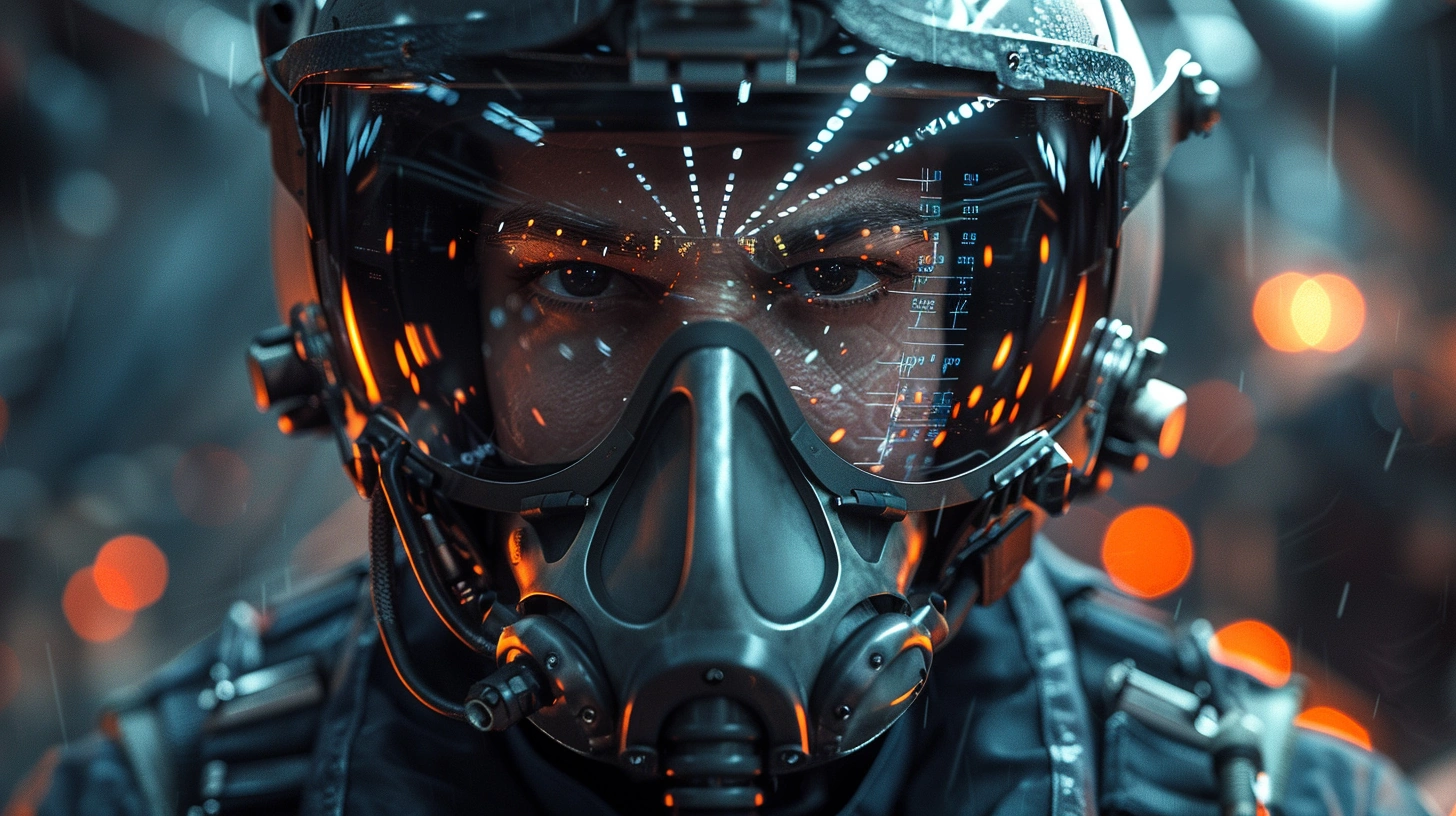
Stanford University and the U.S. Air Force Test Pilot School are testing an AI copilot designed to help pilots respond faster during life-or-death, in-flight emergencies.
The project pairs Stanford engineers with the Test Pilot School and the DAF-Stanford AI Studio to evaluate whether an AI assistant can reduce pilot workload and improve decision-making when seconds matter.
The system was developed inside Stanford’s Intelligent Systems Laboratory, which focuses on decision-making tools for safety-critical environments. Mykel Kochenderfer, associate professor of aeronautics and astronautics at Stanford, says the goal is not to replace pilots, but to help them diagnose problems and surface the right information instantly under extreme pressure.
“Pilots train intensely for emergencies, but accident databases show that many mishaps stem from human error. If we can get the right information to the pilot as quickly as possible, we can significantly improve safety.”
The AI copilot runs on an iPad and acts like a highly advanced “Ctrl + F,” quickly scanning flight manuals and checklists to allow it to return relevant guidance within seconds, rather than forcing pilots to search through documents manually.
Says Stanford PhD candidate Marc Schlichting,
“When a pilot spots an anomaly like a warning light, time is always the limiting factor. Normally, they’d flip through checklists and manuals to diagnose the issue, but the assistant can scan those and return guidance within seconds. It may not sound like much, but in an emergency, those seconds matter.”
Because hallucinations pose a serious risk in aviation, the team says it spent extensive time constraining the system so pilots could trust its recommendations in high-stress scenarios.
To validate the technology, researchers first used a full-motion simulator at Stanford capable of recreating rare and cascading failures too dangerous to test in flight. They then moved to real-world testing.
Twenty-four Test Pilot School pilots flew a Learjet 25 through two custom emergency scenarios, once without the AI assistant and once with it, allowing researchers to measure changes in workload, diagnosis speed and decision quality.
Captain Jorge “FAIR” Cervantes, a TPS student involved in the tests, says the flights revealed how pilots actually interact with AI tools under pressure and which information they trust in real time.
Researchers say the results are still being analyzed and will be detailed in an upcoming paper. Kochenderfer says feedback from the flight tests is already being used to build a new version of the assistant with voice interaction and vision capabilities.
“Each phase of testing was baby steps toward building the confidence required to deploy AI assistants responsibly and reliably in safety-critical environments, and ultimately, to make flying safer for everyone.”
Disclaimer: Opinions expressed at CapitalAI Daily are not investment advice. Investors should do their own due diligence before making any decisions involving securities, cryptocurrencies, or digital assets. Your transfers and trades are at your own risk, and any losses you may incur are your responsibility. CapitalAI Daily does not recommend the buying or selling of any assets, nor is CapitalAI Daily an investment advisor. See our Editorial Standards and Terms of Use.