

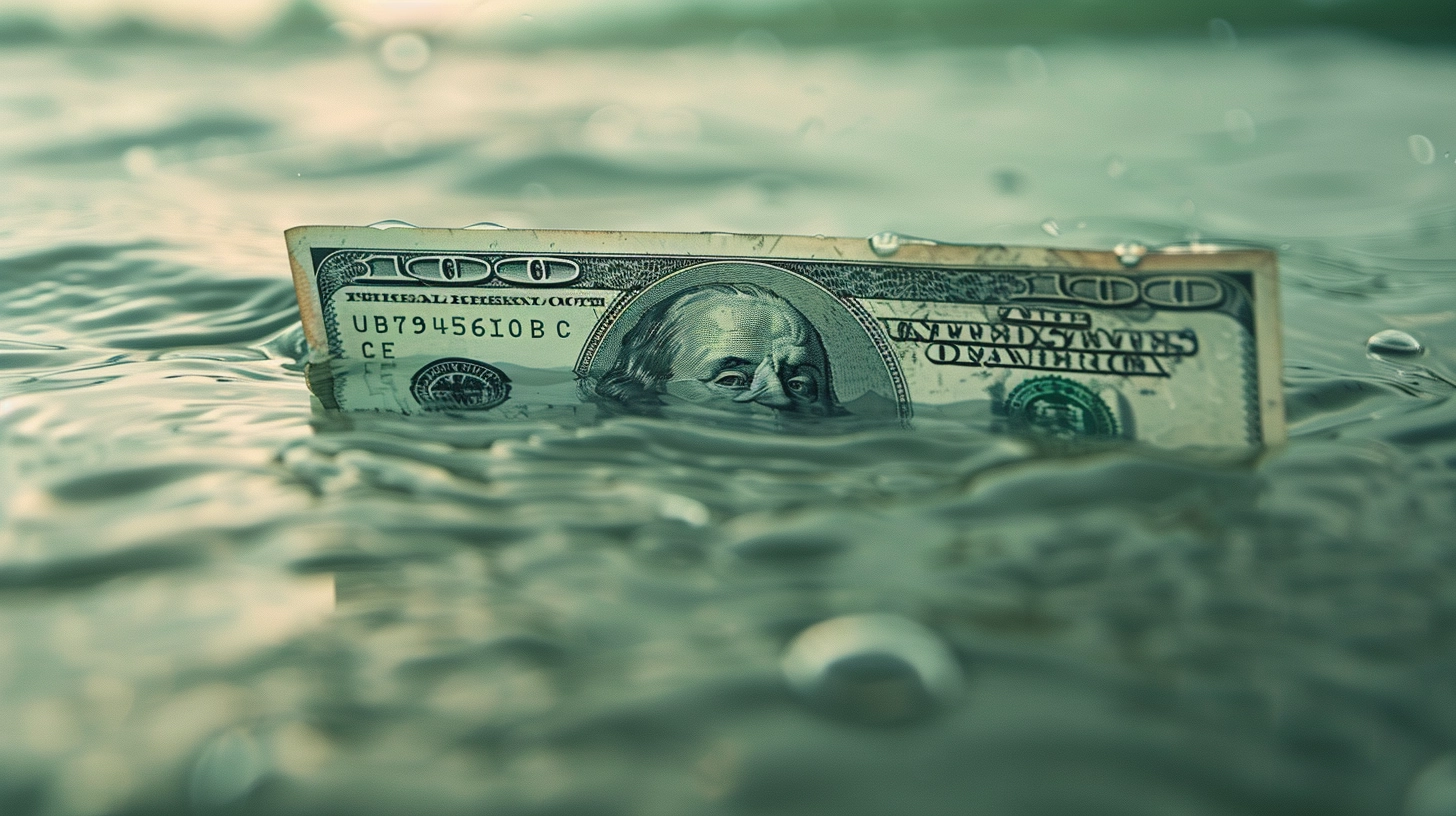
Nassim Taleb says investors are continuing to move away from the US dollar, while piling into a safe-haven asset.
In a new Bloomberg Television interview, the “Black Swan” author says investors around the globe are collectively ditching the US dollar in favor of gold.
Taleb highlights that investors are now using US dollars just to buy gold.
“So my point is I’m not making commentary on the price of metals. It’s largely structural. The US is progressively losing its status as a reserve currency. You still have transactions in US dollars, and people are storing them in gold.”
According to Taleb, investors are wary of US dollar debasement as America’s national debt swells to record levels.
“It is a problem because we have a deficit, and we need progressively more and more foreign investors.”
Recently, the Congressional Budget Office (CBO) reported that the US will run a $1.9 trillion budget deficit, which will progressively grow to $3.1 trillion by 2036. At time of publishing, the US national debt stands at $38.749 trillion.
Taleb also criticizes recent policy decisions, saying they have reduced incentives for investors to hold dollar assets.
“But the current administration hasn’t been helpful because they ticked off both their friends and their enemies. So you don’t have an incentive to store in US dollars. If you know that your asset could be frozen, you could have confiscation. This is not the right environment for storage of US currency.”
Taleb warns that the trend could persist until greater policy clarity emerges.
“And so it’s going to continue until we have more clarity about both policies.”
His remarks suggest that geopolitical tensions, fiscal deficits and trust in asset security may increasingly shape the long-term trajectory of the dollar’s reserve status.
Disclaimer: Opinions expressed at CapitalAI Daily are not investment advice. Investors should do their own due diligence before making any decisions involving securities, cryptocurrencies, or digital assets. Your transfers and trades are at your own risk, and any losses you may incur are your responsibility. CapitalAI Daily does not recommend the buying or selling of any assets, nor is CapitalAI Daily an investment advisor. See our Editorial Standards and Terms of Use.