


Retail return fraud is becoming one of the largest hidden drains on the retail economy, even as companies race to deploy artificial intelligence to contain it.
New data from UPS reverse logistics firm Happy Returns shows that returns are no longer a marginal issue for merchants.
Retailers now estimate that 15.8% of total annual sales will be returned in 2025, pushing total retail returns to an estimated $849.9 billion for the year.
Within the flood of merchandise, fraud represents a meaningful and persistent slice of the problem. The report finds that 9% of all returns are fraudulent, representing roughly $76.5 billion in losses across the industry.
“Retail return fraud occurs when a customer purposefully exploits a retailer’s return process. The person engaging in this fraudulent behavior may have a few goals in mind — getting a refund, receiving a discount on a high-value item, or, in the case of an organized scam, making a profit on stolen goods. But at its core, the goal of return fraud is to obtain something without paying what is owed to the retailer.”
To combat return fraud, Happy Returns says retailers are increasingly turning to AI and machine learning as part of their defense. The report shows that 85% of merchants are now using AI or machine learning in their returns process, deploying systems designed to flag suspicious behavior such as empty-box claims, overstated quantities and label tampering.
However, the results have been uneven. While 45% of retailers say AI has been effective, another 40% report mixed outcomes.
The core driver of the problem appears to be shoppers’ behavior. Happy Returns finds that 45% of consumers say it is acceptable to “bend the rules” when returning items, particularly when they are dissatisfied with a purchase. That attitude has made return fraud harder to deter, even as detection tools become more sophisticated.
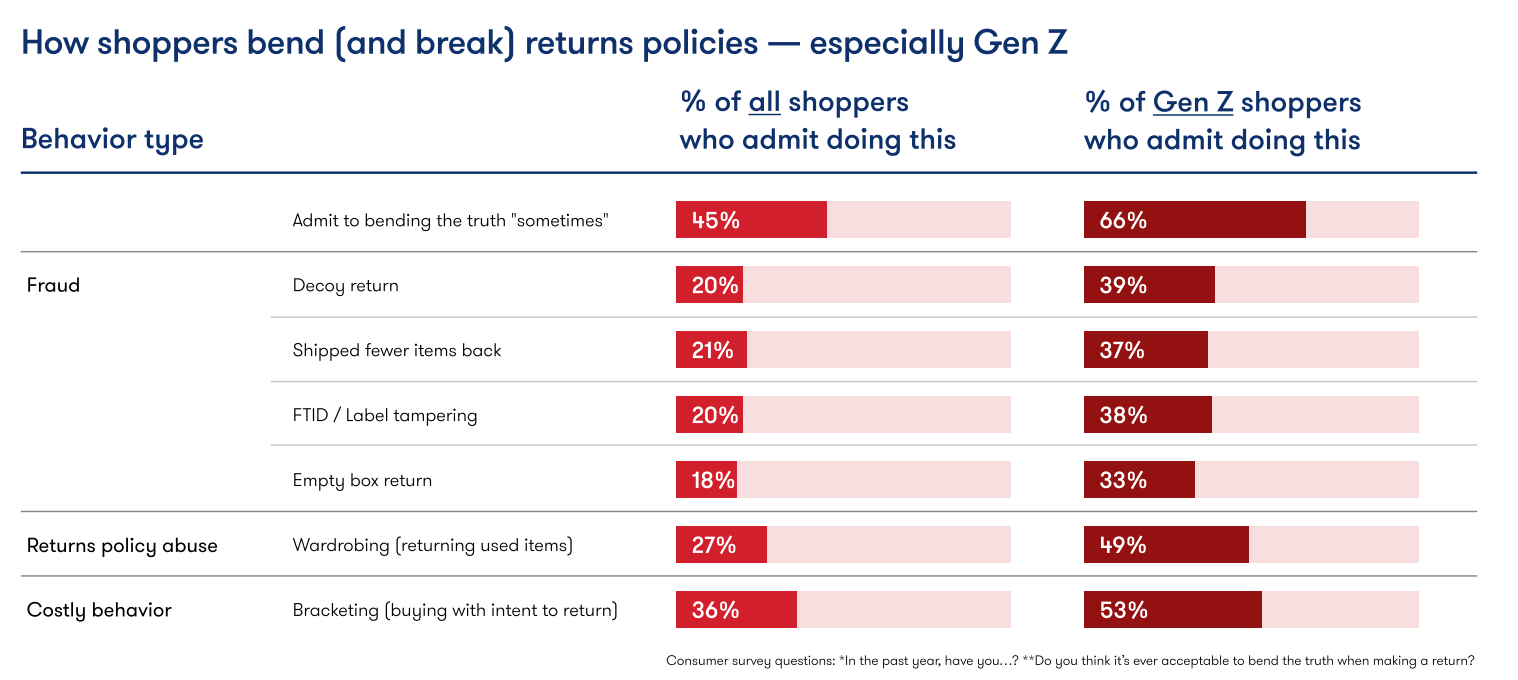
The data suggests that as return volumes approach $1 trillion annually, technology alone will not resolve the tension between customer-friendly return policies and mounting fraud. AI may reduce abuse at the margins, but changing shopper behavior remains the industry’s hardest problem to solve.
Disclaimer: Opinions expressed at CapitalAI Daily are not investment advice. Investors should do their own due diligence before making any decisions involving securities, cryptocurrencies, or digital assets. Your transfers and trades are at your own risk, and any losses you may incur are your responsibility. CapitalAI Daily does not recommend the buying or selling of any assets, nor is CapitalAI Daily an investment advisor. See our Editorial Standards and Terms of Use.