

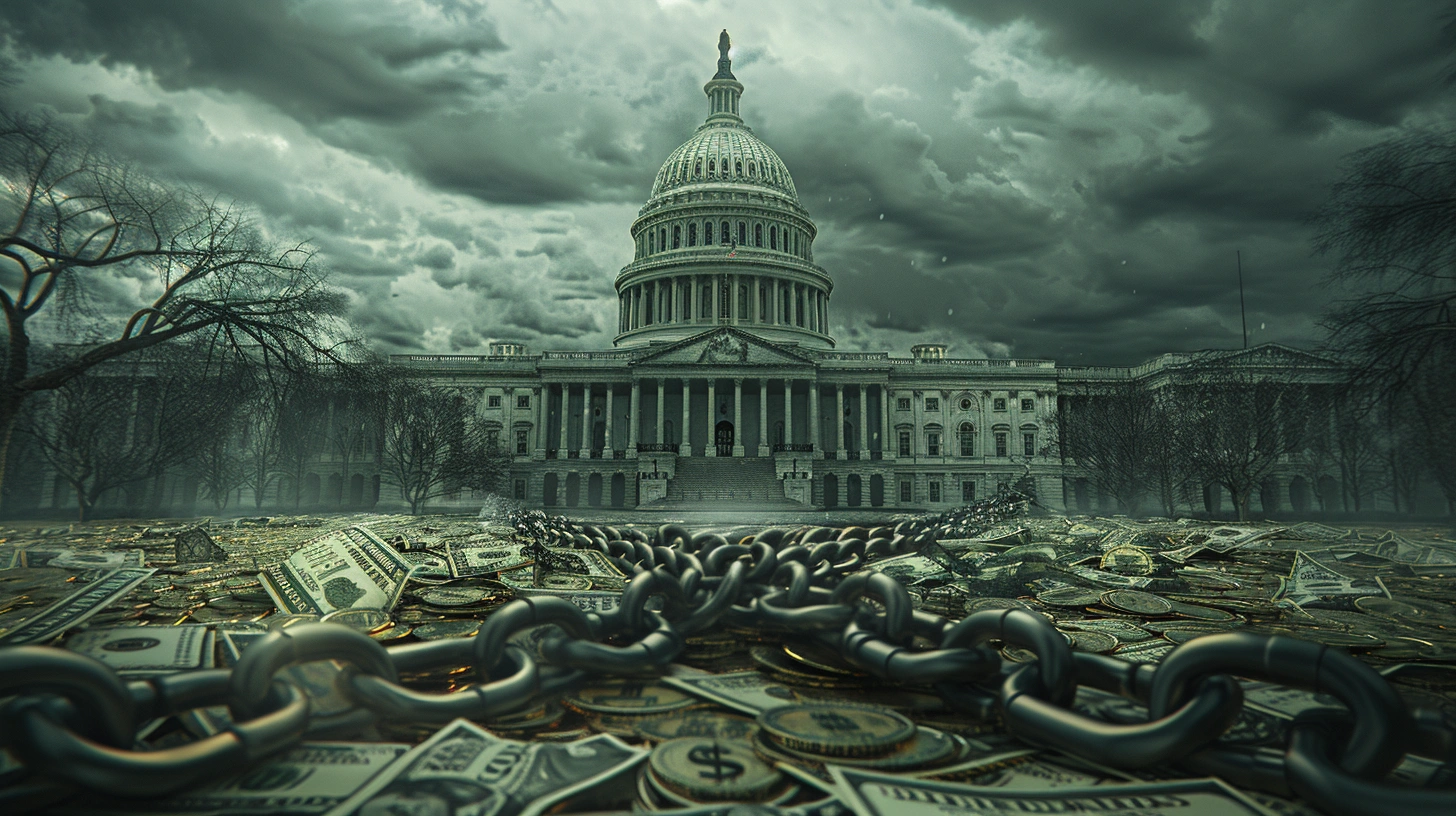
Senator Rand Paul says the United States’ growing national debt poses the biggest threat to the country’s long-term security.
In a new interview with Bloomberg, the Kentucky Republican says rising federal borrowing weakens national stability even as Washington debates major increases in military spending.
Paul warns that proposals to expand defense budgets while debt continues to climb could increase fiscal risks.
“I think the biggest threat to our country and to our national security is our debt. So I think adding more to our debt doesn’t make us safer. It actually will make us more in danger to be further in debt. So the administration has said they want to increase the budget by 50%. That sounds like a large increase from $1 trillion to $1.5 trillion. That’s right. And then in the meantime, they may ask for another $50 billion or so, maybe $100 billion.”
According to Paul, the US is already spending more on its military than the next 10 countries combined.
“We spend plenty on our military. It needs to be spent wisely, but they’re spending an extraordinary amount on two wars. We’ve had two wars in one month. I mean, for goodness’ sake, they’re talking about another war with Cuba as we speak. So yeah, they cost money. They cost lives, most importantly, but they also cost money. I wasn’t for the war in Venezuela, I’m not for the war in Iran and I’m certainly not for a war with Cuba.”
The senator’s comments come as the nation’s debt continues to rise rapidly. Treasury data shows that the country’s national debt surged from $38.423 trillion on January 2nd to $38.919 trillion on March 10th.
That’s an increase of more than $496 billion in just three months.
Last month, billionaire Ray Dalio said he’s backing a bipartisan plan to cap the budget deficit at 3% of GDP, noting that it would create a measurable benchmark for financial discipline.
Disclaimer: Opinions expressed at CapitalAI Daily are not investment advice. Investors should do their own due diligence before making any decisions involving securities, cryptocurrencies, or digital assets. Your transfers and trades are at your own risk, and any losses you may incur are your responsibility. CapitalAI Daily does not recommend the buying or selling of any assets, nor is CapitalAI Daily an investment advisor. See our Editorial Standards and Terms of Use.