


A growing share of YouTube’s recommendation engine is being overtaken by low-quality, mass-produced AI videos, according to new research tracking what users now see when they open the platform.
The findings come from a new global analysis by Kapwing, which examined trending YouTube channels across dozens of countries and measured the reach of so-called “AI slop” content.
The researchers defined AI slop using the Oxford University Press standard for content that is low quality, inauthentic or inaccurate, and distributed in an indiscriminate or intrusive way.
To measure scale, Kapwing identified the top 100 trending YouTube channels in each country, isolated those primarily delivering AI-generated content, and then aggregated subscriber counts and views, estimating revenue using SocialBlade data.
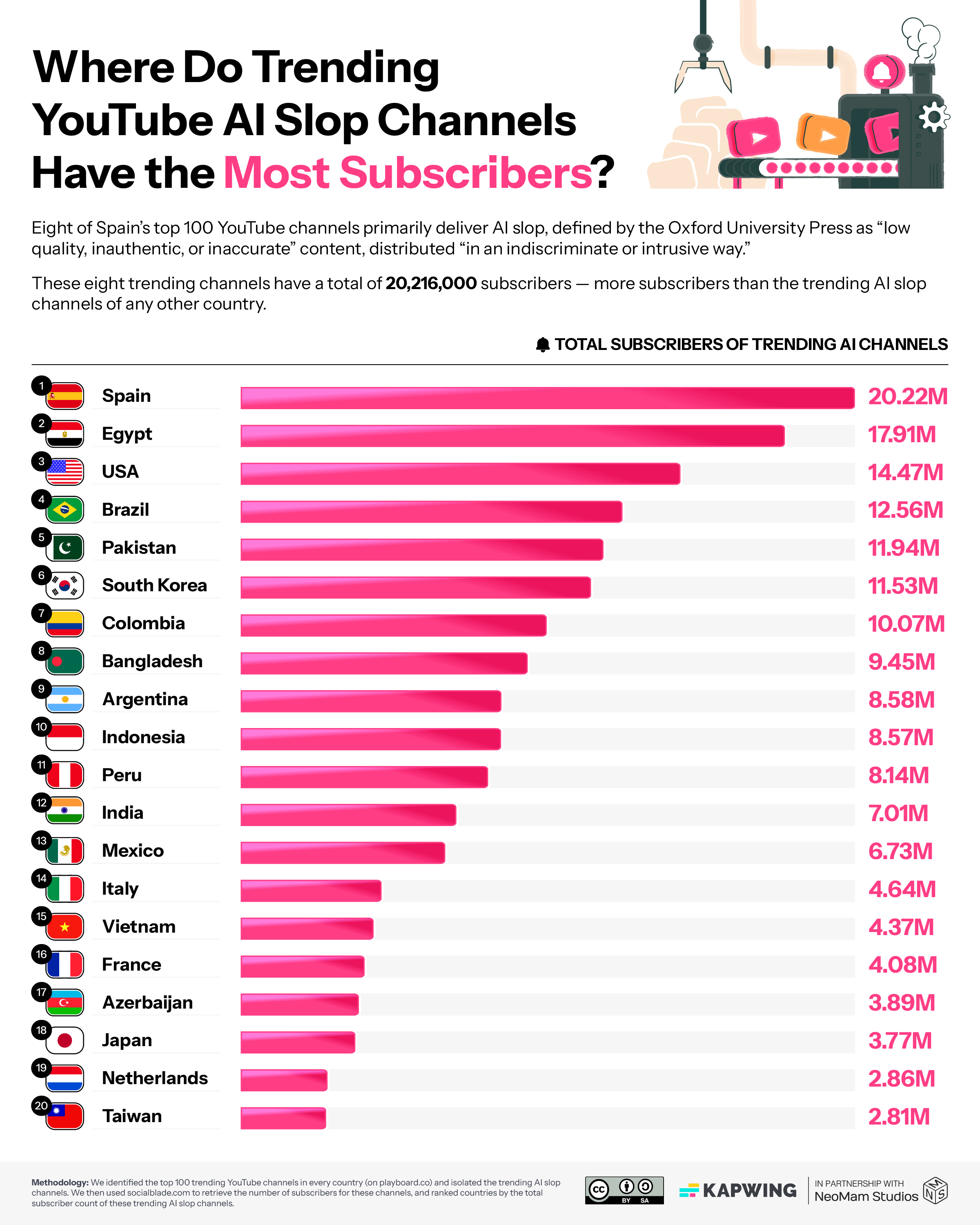
The results show that Spain leads the world in total subscribers to trending AI slop channels, with a combined 20.22 million subscribers across eight channels. That total exceeds the AI slop subscriber counts of any other country analyzed.
Egypt follows with 17.91 million subscribers, while the United States ranks third with 14.47 million subscribers tied to its trending AI slop channels.
In terms of raw consumption, South Korea stands out. Kapwing found that its trending AI slop channels have amassed a combined 8.45 billion views, highlighting how engagement can surge even in markets with fewer channels.
At the channel level, India’s Bandar Apna Dost emerged as the most-viewed AI slop channel globally, with 2.07 billion total views. Kapwing estimates the channel generates approximately $4.25 million in annual revenue.
Subscriber dominance tells a different story. The U.S.-based channel Cuentos Facinantes [sic] holds the largest subscriber base of any AI slop channel worldwide, with roughly 5.95 million subscribers.
To understand how new users encounter AI-slop content, researchers also created a fresh YouTube account and cycled through 500 YouTube Shorts. They found that approximately 33% of the videos surfaced in the feed qualified as AI slop or brainrot content.
The study comes as the cost to generate tokens has collapsed over the past two years. Citing data from JPMorgan Asset Management, Salesforce CEO Marc Benioff said that generating one million tokens now costs between $0.10 and $0.50 compared to about $40 in 2023, representing a 99.5% collapse in price.
A 60-second AI video script might require 300–600 tokens, costing fractions of a cent, which allows creators to flood video hosting platforms.
Disclaimer: Opinions expressed at CapitalAI Daily are not investment advice. Investors should do their own due diligence before making any decisions involving securities, cryptocurrencies, or digital assets. Your transfers and trades are at your own risk, and any losses you may incur are your responsibility. CapitalAI Daily does not recommend the buying or selling of any assets, nor is CapitalAI Daily an investment advisor. See our Editorial Standards and Terms of Use.