


Social media titan Meta is rolling out new tech and tools to combat scammers using its platforms to drain money from victims.
In a new update, Meta says it removed 159 million scam ads on its platforms that violated the firm’s policies and took down 10.9 million accounts on Facebook and Instagram that had ties with criminal scam centers.
According to Meta, scammers are now evolving their tactics, and the company is responding by using AI to fight off celeb-bait and brand impersonation.
“Our experts and specialists in combating scams built advanced AI systems that can analyze multiple signals — such as text, images, and the surrounding context — to spot a broader range of more sophisticated scam patterns faster and at scale.”
Meta says it is using AI to scrutinize fake fan sentiment, misleading bios, or associations with public figures or brands to catch deceptive impersonations. It is also using the technology to detect deceptive links and domain impersonation.
On top of AI deployment, Meta says it is rolling out anti-scam tools across Facebook, WhatsApp and Messenger.
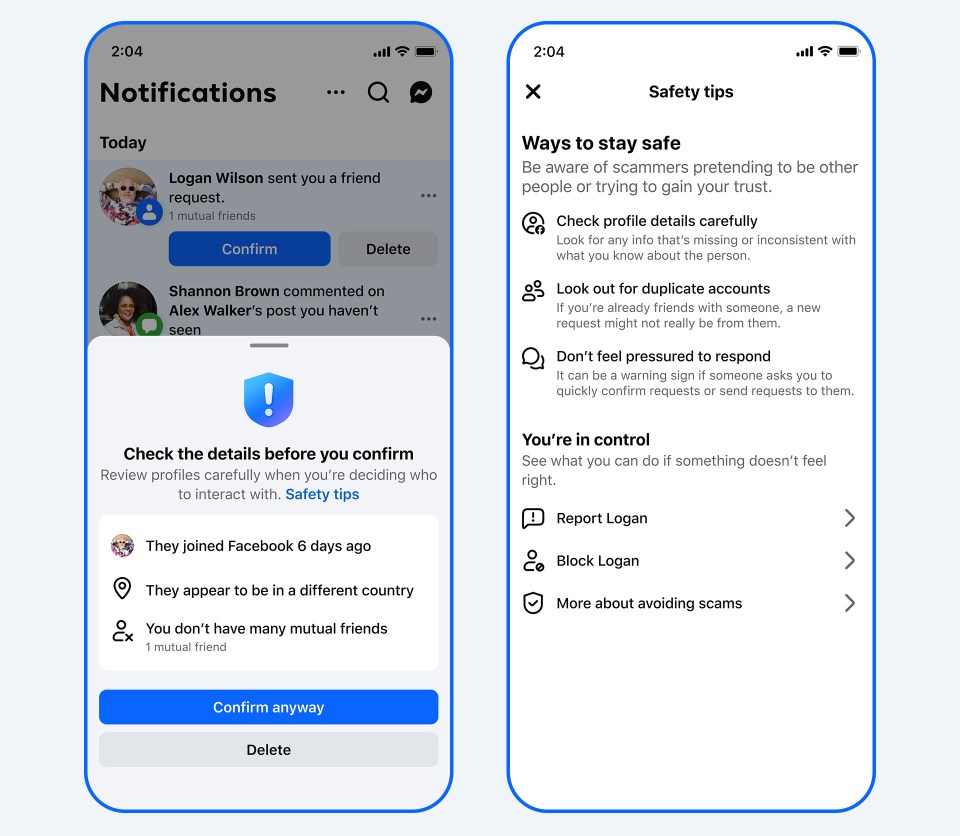
The firm says it is now testing new warnings on Facebook for suspicious friend requests.
“When you send or receive a request from an account that shows certain signs of suspicious activity, including when you do not have many mutual friends with them or they indicate a different country location in their profile, you’ll see an alert to help you make an informed decision to block or reject suspicious requests.”
Meta adds that it is now alerting WhatsApp users against malicious device linking.
“Scammers may try to trick you into linking your WhatsApp account to their device… They may also try to trick you into scanning a QR code under false pretenses, which would then link the scammer’s device to your account.
To stay ahead of these tactics, WhatsApp will now alert you when behavioral signals suggest a linking request might be suspicious. These alerts will show you where the request is coming from and warn that it could be a scam, giving you the chance to pause and reconsider before it happens.”
Lastly, the firm says it plans to roll out advanced scam detection on Messenger this month.
“When a chat with a new contact may contain patterns of common scams like suspicious job offers, we warn you and ask if you’d like to share recent chat messages for an AI scam review. If a potential scam is detected, you will get more information on common scams, and we’ll suggest actions to take including blocking or reporting the suspicious account.”
Disclaimer: Opinions expressed at CapitalAI Daily are not investment advice. Investors should do their own due diligence before making any decisions involving securities, cryptocurrencies, or digital assets. Your transfers and trades are at your own risk, and any losses you may incur are your responsibility. CapitalAI Daily does not recommend the buying or selling of any assets, nor is CapitalAI Daily an investment advisor. See our Editorial Standards and Terms of Use.