


Famed market bear Michael Burry warns that the next pullback could be worse than the one witnessed in April 2025, when the S&P 500 plunged over 15% in just a month.
In a new Substack post, the Big Short investor says it’s been 34 years since the Dow Jones Industrial Average and the S&P 500 touched the average Shiller Cyclically Adjusted PE.
Burry notes that four predictable forces have lifted the markets to overvalued territory for more than three decades, a feat that has “never happened before.”
“The passive investing structural bid, the stock buyback structural bid, the demographic engine, the federal government’s plunge protection team.
These four forces have set up a market structure that has put valuations near all-time highs and recruited individual investors like no prior market ever has.”
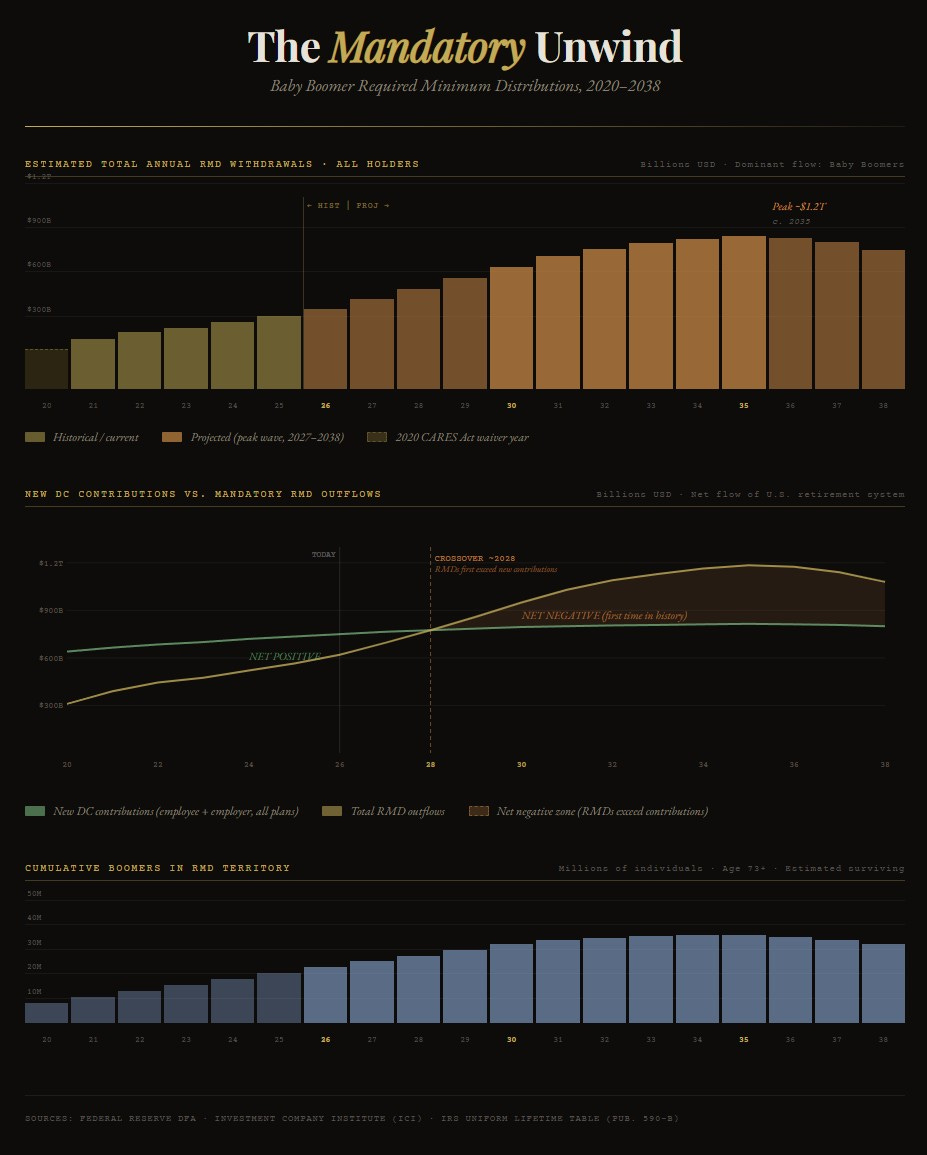
But according to the famed short-seller, those forces are on the brink of reversing, starting with the passive investing structural bid from the Baby Boomers. The investor notes that the 401(k) contributions from older generations will be outpaced by redemptions in 2028 as more Baby Boomers retire.
“At $250 billion a year now and peaking over $1 trillion in the early-mid 2030s, redemptions will increasingly offset 401(k) contributions until 2028, when the redemptions first exceed contributions.”
Burry also notes that stock buybacks are already in retreat as Big Tech reallocates free cash flow to the AI buildout.
“As Meta’s CFO Susan Li said on the earnings call February 6, 2026, ‘The highest priority is investing our resources to position ourselves as a leader in AI.’
It is not clear when the buyback bid may return in a similar size. Perhaps not for decades.”
According to the investor, the US stock market is now ripe for a major correction amid fading structural bids, geopolitical risk and “potentially reckless” AI spend.
“The catalyst may not be much of anything. The stock market might realize that $5 trillion of VC unicorns do not make lasting customers, or that the free cash flow is disappearing from our largest companies in a blink of an eye. The market might just roll over because it is time like in March of 2000.
My point is that the next one is likely to be even more violent than Liberation Day. And one day, the gloom might stick, backed by disappointed expectations and ruined narratives, yet still a long way from anyone examining rate-sensitive discounted cash flows.”
Disclaimer: Opinions expressed at CapitalAI Daily are not investment advice. Investors should do their own due diligence before making any decisions involving securities, cryptocurrencies, or digital assets. Your transfers and trades are at your own risk, and any losses you may incur are your responsibility. CapitalAI Daily does not recommend the buying or selling of any assets, nor is CapitalAI Daily an investment advisor. See our Editorial Standards and Terms of Use.